


Noticed blood after a bowel movement? Before you dismiss it as “probably just hemorrhoids,” consider this: research shows four warning signs commonly appear months before an early colorectal cancer diagnosis. Is rectal bleeding one of them?
Key Takeaways
- Rectal bleeding should never be assumed to be harmless – it can signal conditions ranging from hemorrhoids to colorectal cancer.
- Colonoscopy is the gold standard for evaluating rectal bleeding because it can both diagnose and treat problems in a single procedure.
- The U.S. Preventive Services Task Force recommends colorectal cancer screening starting at age 45 for average-risk individuals – earlier if risk factors are present.
- Most colorectal cancers begin as polyps, which colonoscopy can detect and remove before they turn cancerous.
Rectal Bleeding Is Never ‘Probably Fine’
Spotting blood where it shouldn’t be is alarming – and that instinct is worth listening to. Rectal bleeding is one of the more common reasons people call a gastroenterologist, yet it’s also one of the most frequently dismissed symptoms. People chalk it up to straining, spicy food, or hemorrhoids and move on. Sometimes that’s accurate. Often, it isn’t.
Rectal bleeding can be caused by dozens of conditions, many of them serious. Without proper evaluation, there’s simply no way to know which category a person falls into. Colorectal cancer – one of the most preventable cancers when caught early – rarely announces itself loudly until it’s advanced. Early-stage colorectal cancer frequently causes no symptoms at all. When bleeding does appear, it’s the body’s way of waving a flag.
Hemorrhoids Aren’t the Whole Story
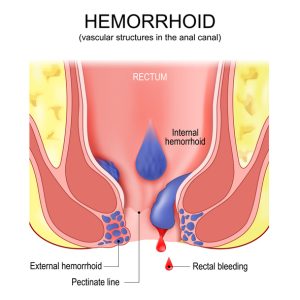
Hemorrhoids are the most common cause of rectal bleeding, and they are usually benign. Bright red blood on toilet paper or in the bowl after a bowel movement is the classic presentation.
The critical point that’s easy to miss: having hemorrhoids does not rule out a more serious condition. Both can exist simultaneously. A physician who attributes all rectal bleeding to hemorrhoids without further investigation may be missing something significant.
When Bleeding Demands a Closer Look
Certain patterns of bleeding are more likely to indicate a problem beyond hemorrhoids. These include:
- Blood that is dark red or maroon rather than bright red
- Blood mixed into the stool rather than coating it
- Bleeding that is persistent or returns repeatedly
- Bleeding accompanied by changes in bowel habits – new constipation, diarrhea, or noticeably narrowed stools
- Unexplained weight loss alongside bleeding
- Fatigue or iron-deficiency anemia with no clear cause
- Chronic abdominal pain or cramping
Research published in the Journal of the National Cancer Institute (JNCI) identified four warning signs that commonly appear in people with early-onset colorectal cancer (diagnosed at age 50 or younger) in the months to years before diagnosis: abdominal pain, diarrhea, iron-deficiency anemia, and rectal bleeding. These are documented patterns that warrant serious attention.
Red-Flag Symptoms That Can’t Wait
Some presentations require emergency care immediately, not a scheduled appointment. If rectal bleeding is accompanied by dizziness, fainting, severe abdominal pain, confusion, or any signs of shock, call 911 or go to an emergency room. These symptoms can indicate a significant hemorrhage from an upper gastrointestinal source, which may require an upper endoscopy rather than – or in addition to – a colonoscopy. For stable patients, colonoscopy is the standard next step.
Colonoscopy: The Gold Standard Explained

Colonoscopy is widely recognized in medical literature as the gold standard for evaluating lower gastrointestinal bleeding in patients.
A flexible tube equipped with a high-definition camera is passed through the anus and guided through the entire length of the large intestine – giving the physician a real-time, close-up view of the colon and rectum lining that no external imaging scan can replicate.
Diagnosis and Treatment in One Procedure
What sets colonoscopy apart from virtually every other screening or diagnostic tool is its dual capability. When the gastroenterologist finds a problem during the procedure, they can frequently treat it at the same time. During a colonoscopy, a physician can:
- Remove polyps (polypectomy)
- Take tissue biopsies for lab analysis
- Cauterize or clip a bleeding vessel to stop active bleeding
- Inject medications directly into tissue
- Remove blockages or place stents when needed
This all-in-one capability is why colonoscopy remains the preferred modality – for cancer screening and for any unexplained lower GI symptom.
What Colonoscopy Can Find
Beyond colorectal cancer and polyps, a colonoscopy can identify a wide range of conditions, including:
- Inflammatory bowel disease (Crohn’s disease, ulcerative colitis)
- Diverticulosis and diverticulitis
- Intestinal ischemia
- Ulcers or perforations
- Large bowel obstructions
- Microscopic colitis
Many of these conditions cause overlapping symptoms – bleeding, pain, altered bowel habits – making visual examination the only reliable way to distinguish between them.
Who Should Get Screened – and When
Average Risk: Starting at 45
The U.S. Preventive Services Task Force and the American Cancer Society both recommend that average-risk adults begin colorectal cancer screening at age 45. A normal result means most people won’t need another colonoscopy for 10 years – a significant return on a single morning procedure. Under the Affordable Care Act, routine colonoscopies are covered by most insurers and Medicare without a copay.
Higher Risk: Earlier Is Better

Certain individuals should begin screening before age 45. These include people who:
- Have a first-degree relative (parent, sibling, or child) diagnosed with colorectal cancer – screening is typically recommended 10 years before the age of that relative’s diagnosis, or at age 40, whichever comes first
- Carry an inherited condition such as familial adenomatous polyposis (FAP) or Lynch syndrome
- Have a personal history of inflammatory bowel disease (IBD)
- Are experiencing symptoms like rectal bleeding, unexplained weight loss, or persistent bowel changes at any age
Recent data from the American Cancer Society has documented a sharp increase in colorectal cancer rates among adults in their 20s and 30s – a trend that makes waiting until older a genuinely risky approach for younger generations.
What the Procedure Actually Involves
Prep, Sedation, and Recovery
The part most people dread is the preparation. The day before the colonoscopy, patients follow a clear liquid diet and take a prescribed laxative formula to fully clear the colon. Modern split-prep protocols – where part of the laxative is taken the evening before and the remainder the morning of – have made this process significantly more manageable than it once was. A clean colon is non-negotiable: if the physician can’t see clearly, the procedure must be rescheduled.
On the day of the procedure, an IV is placed and sedatives are administered – either conscious sedation or general anesthesia, depending on the patient’s needs and preferences. The procedure itself typically takes 15 to 30 minutes, with additional time if polyps are found and removed. Patients spend about an hour in recovery before going home with a driver.
Most people feel normal within 24 hours. Mild bloating or gas is common afterward; light rectal spotting may occur if tissue was removed. Serious complications – such as perforation or uncontrolled bleeding – are rare, occurring in fewer than 3 out of every 1,000 procedures.
Don’t Wait – Bleeding Warrants an Answer
Rectal bleeding rarely resolves the uncertainty on its own. Even when the underlying cause turns out to be benign, confirming that through proper evaluation is the only path to real peace of mind. When the cause is something more serious, the earlier it’s found, the more treatment options remain available.
For persistent bleeding, new symptoms, or anyone overdue for routine screening, a conversation with a gastroenterologist is the right first step. The procedure is quick, the sedation makes it painless, and the information it provides is irreplaceable. Waiting doesn’t make the answer better – it just delays it.