
Advanced Diagnostic and Procedural Services
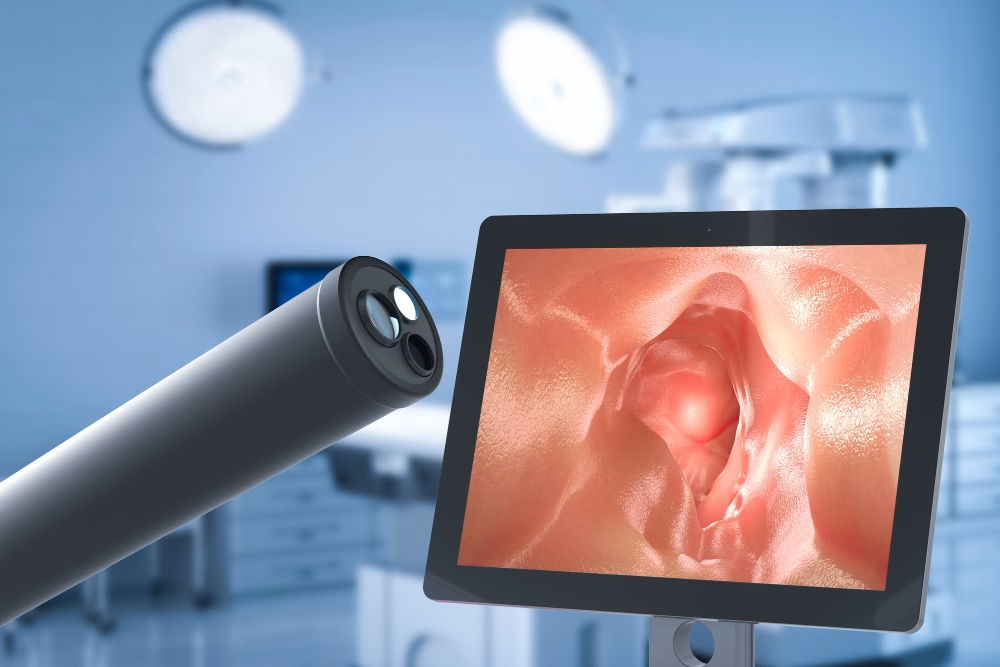
At LA Integrative Gastroenterology & Nutrition, our technical services provide direct visualization and comprehensive assessment of your gastrointestinal tract. Using state-of-the-art diagnostic equipment and minimally invasive techniques, our board-certified gastroenterologists can identify structural abnormalities, remove polyps, obtain tissue samples, and assess intestinal function with precision.
Whether you need preventive colonoscopy screening, treatment of GERD, evaluation of chronic diarrhea, or detection of early-stage gastrointestinal cancers, our technical capabilities support accurate diagnosis and effective intervention. All procedures are performed by experienced gastroenterologists in a comfortable, patient-centered setting with appropriate sedation and safety protocols.
Request an AppointmentComprehensive Technical Services and Procedures

Rectal Expulsion Device (R.E.D) in Los Angeles
Chronic constipation affects nearly 1 in 5 adults in the United States and can significantly interfere with daily life. While occasional constipation is common, symptoms that last longer than two months may indicate…
Read More
Colonoscopy in Los Angeles
Colonoscopy is the gold-standard procedure for colorectal cancer screening, early disease detection, and treatment of gastrointestinal pathology. Our board-certified gastroenterologists perform thousands of procedures with high polyp…
Read More
Endoscopy in Los Angeles
Upper endoscopy (EGD: esophago-gastro-duodenoscopy) visualizes your esophagus, stomach, and upper small intestine. This minimally invasive procedure diagnoses and treats conditions causing reflux, swallowing difficulty, abdominal pain, and…
Read More
Capsule Endoscopy General Information
Also known as Capsule Enteroscopy, capsule endoscopy lets your doctor examine the lining of the middle part of your gastrointestinal tract. This area includes three portions of…
Read More
Intestinal Breath Test in Los Angeles
Small intestinal bacterial overgrowth (SIBO) is diagnosed through hydrogen breath testing—a non-invasive procedure measuring gases your breath produces. This simple test identifies whether bacteria are fermenting carbohydrates…
Read More
Heidelberg Test in Los Angeles
The Heidelberg test measures your stomach acid production non-invasively. Using a tiny wireless pH capsule, we assess whether you produce adequate acid for digestion, identify acid reflux…
Read MoreColonoscopy in Los Angeles
Colonoscopy is the gold-standard procedure for colorectal cancer screening, polyp detection and removal, evaluation of chronic diarrhea or constipation, and assessment of inflammatory conditions. During colonoscopy, a thin, flexible tube with a camera is inserted through the rectum to visualize the entire colon and lower portion of the small intestine. Our physicians can remove polyps, obtain biopsies, and perform therapeutic interventions during the same procedure.
Why choose our colonoscopy services:
- Board-certified gastroenterologists with extensive colonoscopy experience
- High-definition equipment providing superior visualization
- Conscious sedation for patient comfort and amnesia
- Polyp removal with histologic assessment
- Comprehensive post-procedure instructions and follow-up
Endoscopy for Upper GI Evaluation
Endoscopy visualizes your esophagus, stomach, and upper small intestine (duodenum). This procedure helps diagnose GERD complications, Barrett’s esophagus, gastritis, ulcers, early gastric cancer, and other upper gastrointestinal conditions. Like colonoscopy, endoscopy allows tissue sampling and therapeutic interventions. We combine endoscopy with endoscopy and colonoscopy in a single session when both upper and lower GI evaluation is indicated, eliminating the need for separate procedures.
Capsule Enteroscopy for Small Intestine Imaging
Capsule enteroscopy (also called capsule endoscopy) provides direct visualization of the entire small intestine—an area inaccessible to standard colonoscopy and endoscopy. A small capsule containing a camera is swallowed; it travels through your digestive tract while transmitting thousands of high-resolution images to a recording device worn on your belt. This technology is ideal for evaluating obscure GI bleeding, suspected Crohn’s disease, celiac disease complications, and other small intestinal pathology.
Hydrogen Breath Testing for SIBO
Hydrogen breath testing is the non-invasive gold standard for diagnosing SIBO (small intestinal bacterial overgrowth) and other malabsorption conditions. You consume a test solution and then breathe into collection bags at regular intervals. The breath hydrogen levels reveal whether bacteria are fermenting undigested carbohydrates in your small intestine, confirming SIBO and revealing the specific pattern of bacterial overgrowth. This information guides our treatment strategy and helps us monitor treatment response.
Heidelberg Gastric pH Testing
Heidelberg pH testing measures your stomach acid production and acid clearance—critical information that most practitioners overlook. Low stomach acid (hypochlorhydria) is incredibly common in functional medicine patients and drives many gastrointestinal symptoms attributed to “high acid.” Proper diagnosis with Heidelberg testing allows us to determine whether your acid production is adequate, high, or insufficient, guiding targeted treatment. This simple test prevents unnecessary acid-suppressing medications and ineffective treatment protocols.
Why Our Technical Services Excel
Experience and Expertise – Our physicians have performed thousands of procedures and are skilled at managing complex cases and anatomic variations.
Advanced Technology – We invest in high-definition equipment and the latest procedural innovations for superior visualization and safety.
Patient Comfort – We prioritize your comfort with appropriate sedation, clear pre- and post-procedure instructions, and compassionate care throughout the process.
Integrated Approach – Technical findings are integrated with our analytical services and nutritional recommendations for comprehensive, coordinated care.
Therapeutic Capability – Where indicated, we don’t just diagnose—we perform therapeutic interventions during the same procedure, eliminating the need for additional procedures.
Preparation and Recovery
All procedural services include comprehensive preparation instructions specific to the procedure. Most procedures require fasting and bowel preparation (for colonoscopy). Recovery is rapid; most patients return to normal activities within 24 hours. You’ll receive detailed post-procedure care instructions and follow-up contact from our team.
Schedule Your Procedural Evaluation Today
If you need colonoscopy screening, upper endoscopy, capsule imaging, or specialized diagnostic testing, our technical services provide accurate diagnosis and expert care in a comfortable environment.
Request an AppointmentFrequently Asked Questions About Technical Services
What is the preparation for colonoscopy, and how long does it take?
Colonoscopy preparation involves a clear liquid diet for 24 hours before the procedure and bowel preparation with a laxative solution (usually 2-4 liters) taken the evening before and morning of the procedure. This cleanses your colon so our physician can see the intestinal lining clearly. The actual colonoscopy takes 20-30 minutes, but you’ll spend 2-3 hours total at our facility for check-in, sedation, recovery, and post-procedure instructions. Most patients tolerate bowel preparation well, though we’re happy to discuss preferences for different preparation solutions.
Is colonoscopy safe? What are the risks?
Colonoscopy is a very safe procedure when performed by experienced gastroenterologists. Serious complications are rare, occurring in fewer than 1 in 1,000 procedures. Minor risks include temporary bloating or mild cramping. The most serious (but uncommon) risk is perforation of the colon wall, which occurs in about 1 in 5,000 cases and is usually managed successfully with observation or, rarely, surgery. The benefits of screening colonoscopy for cancer prevention far outweigh these rare risks. Our team follows strict safety protocols to minimize all risks.
Will I be sedated during the procedure?
Yes, we use conscious sedation (twilight sedation) during colonoscopy and endoscopy to ensure your comfort. You’ll receive medication intravenously that makes you relaxed and drowsy; you won’t remember the procedure. You’ll need someone to drive you home after the procedure, as the sedation affects your coordination and judgment for several hours. If you prefer procedures without sedation (not recommended for colonoscopy), discuss this with your physician beforehand.
How often do I need colonoscopy screening?
For average-risk adults with no polyps found, colonoscopy screening is recommended every 10 years starting at age 45 (age 50 previously). If polyps are found and removed, follow-up colonoscopy is typically recommended in 3-5 years depending on polyp size, type, and number. If you have a family history of colorectal cancer or personal risk factors, your physician may recommend more frequent screening. Our team will discuss your specific screening interval based on your risk factors and findings.
What does capsule enteroscopy show that regular endoscopy and colonoscopy cannot?
Capsule enteroscopy visualizes the entire small intestine (about 20 feet long), while regular endoscopy only reaches the first portion (duodenum) and colonoscopy only reaches the beginning of the small intestine. Capsule technology is invaluable for diagnosing obscure GI bleeding, Crohn’s disease affecting the small intestine, celiac disease complications, small bowel tumors, and other conditions requiring visualization of this hard-to-reach area. If you’re having unexplained bleeding or suspected small bowel disease, capsule enteroscopy may provide the diagnosis other tests miss.
What is hydrogen breath testing, and what does it tell you?
Hydrogen breath testing is a simple, non-invasive diagnostic test for SIBO and other malabsorption conditions. You drink a sugar solution, then breathe into collection bags at regular intervals over 3 hours. Normally, your small intestine absorbs sugars and bacteria in your large intestine ferment them. If bacteria are present in your small intestine (SIBO), they ferment the sugar prematurely, producing hydrogen that you exhale. Abnormal hydrogen levels confirm SIBO and reveal the type (fructose malabsorption, lactose intolerance, etc.), guiding targeted treatment recommendations.
Why does stomach acid testing matter if I have heartburn?
Many people assume heartburn means too much stomach acid, but the opposite is often true. Low stomach acid (hypochlorhydria) actually causes reflux because food sits in your stomach undigested, creating pressure that pushes stomach contents back into the esophagus. Heidelberg pH testing measures your actual acid production, revealing whether your acid is high, normal, or low. This prevents us from giving you acid-suppressing medications that make the problem worse. If you have reflux symptoms, accurate acid measurement ensures you receive appropriate treatment.